
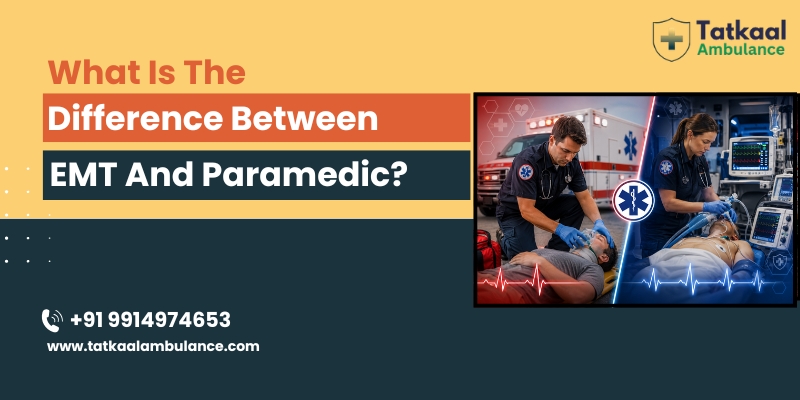
Emergency medical professionals are often the first people to arrive when someone needs urgent medical help. Whether responding to accidents, medical emergencies, or transporting patients to hospitals, these healthcare workers play an important role in saving lives. Two of the most common emergency medical careers are EMT and Paramedic.
Although many people use these terms interchangeably, EMTs and Paramedics have different levels of training, responsibilities, and career opportunities. If you are considering a career in emergency medical services (EMS), understanding these differences can help you make the right decision.
What Is an EMT?
An Emergency Medical Technician (EMT) is a trained healthcare professional who provides basic emergency medical care and transportation for patients.
EMTs are usually the first responders during emergencies and are responsible for stabilizing patients before they reach a hospital.
Common EMT Responsibilities:
- Assessing patients’ conditions
- Performing CPR and basic life support
- Controlling bleeding and treating injuries
- Administering oxygen
- Assisting patients during transport
- Using emergency medical equipment
- Communicating patient information to hospital staff
EMTs work under established protocols and focus mainly on providing immediate basic medical care.
What Is a Paramedic?
A Paramedic is an advanced-level emergency medical professional with more education and training than an EMT.
Paramedics can perform more complex medical procedures and often make critical decisions during emergencies.
Common Paramedic Responsibilities:
- Performing advanced airway management
- Administering medications
- Starting IV lines
- Monitoring heart conditions
- Using advanced life support equipment
- Interpreting patient symptoms
- Managing severe trauma and medical emergencies
Paramedics handle more serious and life-threatening situations and often lead emergency medical teams.
You Can Also Read: ALS vs BLS: Choosing the Right Approach in Critical Situations
EMT vs Paramedic: Key Differences
1. Level of Training
One of the biggest differences is education and training.
EMT Training:
- Shorter training period
- Focus on basic emergency care
- Classroom learning with practical training
Paramedic Training:
- Requires EMT certification first in many regions
- Longer and more advanced education
- Includes clinical and field experience
Paramedic education goes deeper into anatomy, medications, emergency procedures, and patient assessment.
2. Scope of Practice
EMTs provide basic medical support while Paramedics provide advanced medical treatment.
EMTs can:
- Provide CPR
- Use oxygen therapy
- Manage basic injuries
- Assist with patient transport
Paramedics can:
- Administer medications
- Perform advanced cardiac care
- Conduct complex emergency procedures
- Deliver advanced life support
3. Decision-Making Responsibility
EMTs follow structured emergency procedures and protocols.
Paramedics often evaluate situations independently and make medical decisions that directly affect patient outcomes.
4. Career Growth Opportunities
EMT roles are commonly considered an entry point into emergency healthcare.
Paramedics generally have access to:
- Higher-level EMS positions
- Specialized emergency response roles
- Leadership opportunities
- Additional healthcare career paths
5. Salary Potential
Since Paramedics have additional training and greater responsibilities, they generally earn more than EMTs.
Salary can vary depending on:
- Location
- Experience
- Certification level
- Employer type
- Shift schedules
EMT vs Paramedic
| Feature | EMT | Paramedic |
|---|---|---|
| Full Form | Emergency Medical Technician | Paramedic |
| Level of Care | Basic emergency medical care | Advanced emergency medical care |
| Training Duration | Shorter training period | Longer and more advanced training |
| Education Requirement | Entry-level EMS education | Usually requires EMT certification first |
| Medical Procedures | Basic life support | Advanced life support |
| Medication Administration | Limited medication support | Can administer a wider range of medications |
| Airway Management | Basic airway support | Advanced airway procedures |
| Use of Equipment | Standard emergency equipment | Advanced monitoring and treatment equipment |
| Decision-Making | Works under established protocols | Makes advanced clinical decisions |
| Patient Conditions Handled | Stable to moderate emergencies | Critical and life-threatening emergencies |
| Clinical Responsibilities | Patient assessment and transport | Advanced treatment and patient stabilization |
| Career Growth | Entry point into emergency healthcare | Greater advancement opportunities |
| Work Environment | Ambulance services, hospitals, emergency teams | Ambulance services, hospitals, critical care teams |
| Salary Potential | Generally lower | Generally higher due to advanced responsibilities |
Similarities Between EMT and Paramedic
Even though their responsibilities differ, both careers share several important qualities.
Both EMTs and Paramedics:
- Work in emergency situations
- Provide patient care
- Operate emergency vehicles
- Collaborate with healthcare teams
- Require physical and emotional resilience
- Help save lives every day
Both professions are highly respected and make a direct impact on communities.
Work Environment for EMTs and Paramedics
Emergency medical professionals work in various environments, including:
- Ambulance services
- Hospitals
- Fire departments
- Emergency response teams
- Private medical transport services
- Community healthcare organizations
The work environment can be fast-paced and unpredictable.
Skills Needed to Succeed
Whether becoming an EMT or a Paramedic, certain skills are essential.
Important Skills:
- Strong communication
- Quick decision-making
- Teamwork
- Physical stamina
- Problem-solving
- Emotional control
- Attention to detail
These skills help emergency responders stay effective under pressure.
You Can Also Read: What is the Difference Between 102 and 108 Ambulance?
Which Emergency Career Is Right for You?
Choosing between EMT and Paramedic depends on your personal goals and interests.
Choose EMT if:
- You want to enter healthcare quickly
- You prefer shorter training
- You want hands-on patient care experience
Choose Paramedic if:
- You want advanced medical responsibilities
- You enjoy critical decision-making
- You are interested in long-term healthcare career growth
Many healthcare professionals begin as EMTs and later advance to become Paramedics.
You Can Also Read: What Is the Difference Between CCU VS ICU Ambulance?
Final Thoughts
Both EMTs and Paramedics play essential roles in emergency healthcare. EMTs provide immediate basic care and support, while Paramedics deliver advanced treatment during critical situations.
There is no single “better” option—only the career path that best matches your goals, interests, and commitment level. No matter which path you choose, both careers offer the opportunity to make a meaningful difference and help people during some of the most important moments of their lives.